
“Cut the EU red tape choking Britain after Brexit to set the country free” – The Telegraph
The EU (Withdrawal) Bill is currently moving through Parliament. The purpose of this bill is to transfer the laws currently governed by the EU into UK law so that there are no breaks or holes in legal competence once Brexit happens. Of course, there are also opportunities to make changes, big and small, to the laws being transfered as they come in and when something of this size comes through there is precious little time for detailed oversight of the process and the opportunity for some of these changes to fit ideological ends can become irresistible.
For example, last night Labour put up an amendment which would have ensured that the EU’s “precautionary principle” over environmental legislation would be protected and the Tories voted is down 313-297.

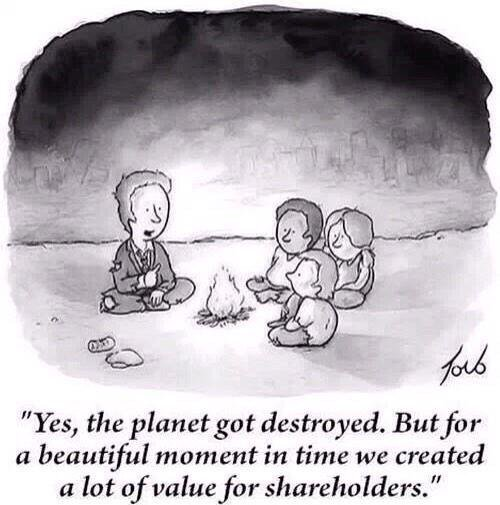
This represents the clearest sign yet that the Tories are planning a post-Brexit regulatory slash-and-burn.
It’s important to consider just what the precautionary principle is and why it is important.
Under this principle, if you want to bring in a new product or process into use in the EU and it is covered by the precautionary principle (for example, a genetically modified food additive, a new medicine or a new type of pesticide) then it is up to you and your company to prove that it is entirely safe and in accord with regulations before it is approved for use. The EU environmental bodies MUST be satisfied of this or it is simply not allowed to be used in the first place. “First, do no harm” is in effect, especially in cases where it is difficult to test or predict the outcomes ahead of time.
After this, it is the job of those bodies to monitor the product or process and to monitor the people and companies using it to ensure that it remains in compliance but because the barrier to entry was so high then the risk should be comparatively small.
Compare this with the system used in places like the USA where the onus and burden of proof is on the government to prove that a product or process is actively dangerous before it can be removed from sale.
The risk here is obvious. First, the harm must be done BEFORE the product can be removed. If it turns out that your pesticide is toxic but the effects don’t show up for a few years then it is possible that animals and people could be badly harmed before the product is withdrawn. The clean-up costs may be significant, if they are possible at all, and then we get into the age-old problem of companies flexing their legal muscle to avoid or dodge liability.
You can imagine the conversation:
“Sure, all the bees died but can you prove beyond reasonable doubt that it was us who killed them and not the company next door? Wait…you can?…ah, but that completely separate legal entity just went bankrupt and our totally new company just bought the assets. It wasn’t technically us.”
There’s also the problem that this leads to a regulatory body which has to be large enough to carry out the tests, inspections and legal enforcements and, again, America shows that when there is an appetite for “Austerity” or in the face of ideological attack, these bodies are often the first to be defunded in the name of “cutting red tape“.
I’d be very, very worried about the direction this Tory-led Brexit is taking Britain. If the environmental regulations are to be thrown to the wind like this, I wouldn’t be at all confident that workers rights and conditions won’t be next. Look out for those key phrases in the discourse. The changes will be “cutting red-tape”, making Britain “more competitive” and “attracting companies”.
You can follow Dr Craig Dalzell at The Common Green