
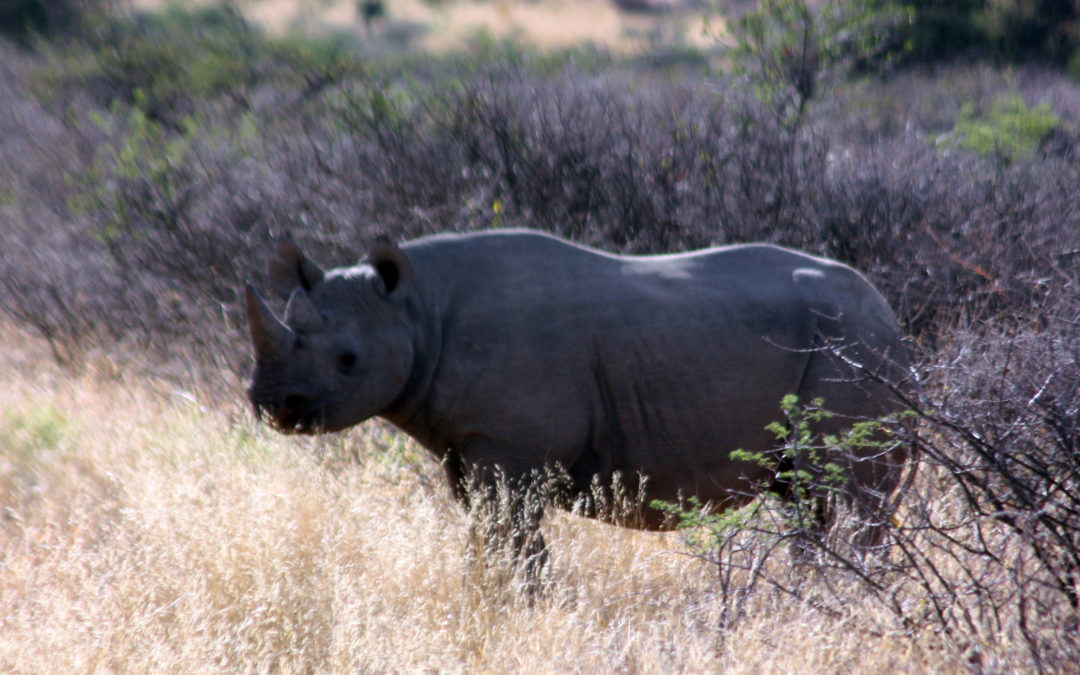
1. Black Rhino
There are fewer than 2,500 Black Rhino remaining with numbers still declining due to the current poaching for its horn.
Facts
One of the oldest mammals on the earth, Brought back from the brink of extinction once before (1970s),These huge beasts can run up to 55mph (88kph), Found mainly in South Africa.
2. Pangolin
One of the most endangered mammals on the planet due to poaching for its flesh and scales.
Also known as the Scaly Ant Eater
Very picky eaters, mostly insectivores
Rolls up into a scaly, almost impenetrable, ball for protection
Found in the tropical regions of Africa and Asia.
3. Elephants
80% of the African Elephant population has been decimated by trophy hunting and ivory poaching.
Currently 30,000 to 40,0000 are poached annually
Massive herds used to roam the African continent
Matriarchal social groups are highly intelligent and compassionate
4. Gorilla
Three Gorilla species are declining at alarming rates due to poaching and habitat loss leaving very few in number.
About 5,000 Western Lowland; 300 Cross River; 700 Mountain
Gorillas share 98.3% of their genetic code with humans
Unlike King Kong they are mostly shy passive animals
Found in the Central Region of Africa, mainly the Congo Basin.
5. Leatherback Turtle
Their biggest threats are egg harvesting, being caught in commercial shrimping nets and plastic shopping bags.
Populations have collapsed in the Pacific and South West Atlantic
The largest sea turtle species (6’ long, 1,400lbs)
A major jellyfish predator keeping populations in check
Large migratory routes across the Atlantic and Pacific oceans.
6. Addax
The Addax is at the brink of existence due to frenzied unregulated hunting for its skin and habitat loss.
Very rare with fewer than 300 remaining in the wild
Adapted to thrive in harsh desert temperatures with little vegetation
Long 2.5ft twisted horns on a smaller 3ft antelope
Once roamed the enormous deserts covering most of North Africa.
7. Painted Dogs
Only 7,000 remaining in the wild they are seen as a threat to livestock and trapped, poisoned and shot by farmers.
Not really a dog but a species all on their own
Very cohesive efficient pack hunters
Can reach speeds of 44mph (71kph)
Is There Hope For Their Survival?
With the never ending battle against poaching, and human populations ever expanding, wildlife is at increasingly high risk. According to the World Wildlife Fund, in the time is takes you to read this page, one of our planet’s species will become extinct. By this time tomorrow 150–200 more will have disappeared. And by this time next year, over 50,000 more will be lost.Mind boggling! With the rapid decline in species who determines which animals are critically endangered and in need of immediate attention?The International Union for Conservation of Nature (IUCN) is an international organization focused on nature conservation and sustainable use of natural resources. The IUCN scientists use population counts in the wild (and other scientific measures) to determine a specie’s status.Animals that are classified as ‘Critically Endangered’ have a 50% probability of becoming extinct in the wild in the next 10 years. That is not much time. There is much work to be done by everyone who cares.
All Is Not Lost!
Because there are passionate and committed people like involved to protect the rhino and the pangolin, there is hope. Saviours of wildlife &tanzania hepertology with our teams we are fighting to protect rhino and other wildlife from poachers via strategic on the ground and in the air (with drones) procedures that detect, deter and apprehend poachers before they strike and kill and raising wildlife awareness through educating the mass from the grass roots level of primary and secondary schools student’s.Including working closely with government and law enforcement officials.Our mission is raising conservation awarenesses lowering poaching activities and extinction is forever.

You can read more from Brighton at his webpage by clicking HERE
featured image BLACK RHINO
